Rice is the basic diet for millions of people and one of the primary agro-commodities traded locally and internationally. Rice should provide quality, texture, and performance in cooking for all these uses. This means that rice production should incorporate proper sourcing of raw materials, modern methods of processing, and quality control. Finding reliable rice producers in India will be important for wholesalers, distributors, retailers, food companies, and international buyers.
There is a wide range of rice manufacturers in India including long grain basmati rice and non-basmati varieties for different cuisines. All of these varieties have specific features which require proper identification, processing, and packaging.
The company looking for a dependable rice producer may consider Mahadev Overseas while looking at possible options. The understanding of how rice producers keep the quality of their product will help in selecting the product to suit commercial needs.
How Do Rice Manufacturers Contribute to the Process in India?
Rice manufacturing consists of several stages including sourcing of paddy, its processing, grading, packaging, and preparation for shipment. Each of them affects the quality of rice that will be on the market.
Reputable Indian rice manufacturers start by choosing appropriate raw materials depending on the variety and the purpose of their further use. Further, they choose the right ways to process rice and to eliminate the unnecessary parts, and to prepare it according to the characteristics of the end product.
Manufacturers can provide their services to domestic retail companies, wholesalers, restaurants, institutional customers, or export markets. In each case, there can be certain expectations about grain length, amount of broken grains, moisture content, size of packages, and other aspects.
Professional manufacturing can help to produce more uniform products and to establish long-term relations with customers. For wholesale and export enterprises, it is especially important since the repeated orders must correspond to the previous agreement.
Quality Starts with Responsible Sourcing of the Paddy
The quality of the finished rice product greatly depends on the state of paddy that will be used for production. Variety, planting, harvesting, drying, and storing all can affect the qualities of the final product.
Rice producers have to evaluate their raw material properly and develop the proper sourcing procedures. Proper variety recognition prevents undesirable mixing of varieties and allows the producer to achieve more predictable results of the manufacturing process.
Storing is also crucial. The paddy has to be stored properly in order to protect it from moisture, pests, and contaminants. Improper storage can spoil the quality of grains and cause problems with further processing.
Buyers can learn the philosophy of the manufacturer concerning quality through its sourcing practices. The company can be asked about variety recognition, raw-material inspection, supplier control, and how paddy is being processed before milling.
Modern Technology of Rice Processing to Achieve Better Consistency
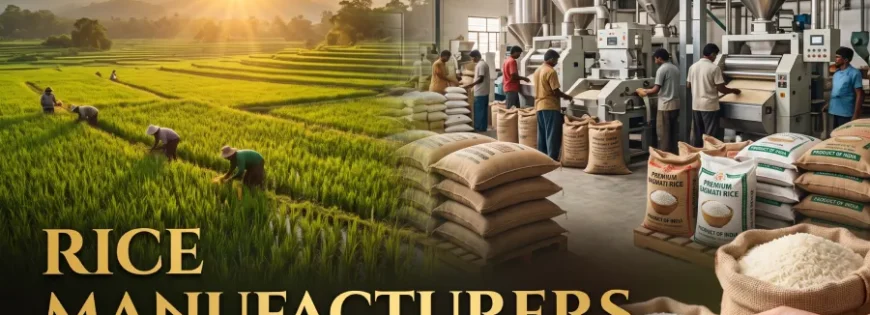
Processing entails the conversion of harvested paddy into rice for sale and consumption. The process can include cleaning, dehusking, milling, polishing, grading, and sorting, among others, depending on the variety of rice being processed and its end-product requirements.
The process of cleaning ensures the removal of any unnecessary matter, including dust, stones, and any other foreign material. Dehusking is the process whereby the outer hull of the grain is removed from the paddy. Additional milling takes place in the preparation of white rice by removing the bran layers. The amount of milling will depend on whether the product produced is white rice or some other variety.
Grading and sorting ensure separation of grains according to size, appearance, among other characteristics. Optical sorting equipment is used in some cases to ensure the identification and removal of certain discolored or defective grains based on the availability of such equipment and product specifications.
Technology may facilitate the process, but efficient processing is not assured by equipment alone.
Indian rice processors can ensure that their products meet buyer specification through better control of the processes mentioned above.
Maintaining the Quality of Grains and Cooking Properties
The quality of the grains does not necessarily have to depend on the physical appearance alone. Other factors that can affect the performance of the grains when cooked in the kitchen include integrity, aroma, texture, moisture, and cooking characteristics.
For instance, basmati rice is known for its aroma and long grains. There are certain types of basmati rice like the 1121 basmati rice that are sought after in cases where the grain length and the separated nature of the grains after being cooked are important. There are other types of rice that are preferred for their softness, stickiness, or suitability for certain regional dishes.
There is a need for manufacturers to ensure that the products are properly identified since all types of rice cannot be treated as the same. The buyers have to examine the product specification and where necessary, ask for samples in order to ascertain the appearance, aroma, and cooking properties of the rice.
Quality Control and Food Safety Practices
Quality control assists in pinpointing issues before the final product gets delivered to consumers. In different cases, checks may be carried out for foreign matter, grain size, broken grain content, moisture levels, and visual defects among others.
The aspect of food safety is also an important one. The manufacturing and processing companies should observe proper hygiene practices and ensure that contamination is avoided, have clean machinery, and proper storage for the finished products. Some consumers may require specific documentation or test reports as required by the destination country.
Traceability is another factor that will boost buyer’s confidence in the procurement process. Batch identification and production process help organizations trace their products’ production process in case of any concern about the final product.
In comparison to rice producers in India, the buyers should seek to know what quality control measures are put in place, what specification measures are used and what happens when a particular batch does not meet the required standards.
Packaging & Storage for Domestic and Export Markets
The choice of packaging is critical for storing, handling, transporting, and distributing the rice. Appropriate packaging will depend on factors such as quantity, target market, type of the product, and mode of shipping.
Small consumer packs may suit retail customers, whereas larger bags may suit wholesalers, distributors, hotels, and food service establishments. Export shipments may have extra packaging requirements based on the buyer’s contract.
Packaging must help in protecting rice from moisture, pest infestation, contamination, and any unnecessary damage. Packaging labels must include all relevant details about the product, including its variety, net weight, batch, origin, and more, depending on the relevant regulations.
Proper storage of rice must be done in clean and dry places, with appropriate stock management procedures. The manufacturer/supplier should provide relevant storage instructions.
Selecting the Proper Rice Manufacturer for Wholesale and Export
The selection of a rice manufacturer involves an evaluation of suitability, quality control standards, production capabilities, prices, and communication. The buyer should first outline the variety of the product, grain specification, packing form, quantity ordered, and delivery time.
When comparing suppliers, it should be done in a fair manner. A reduced price could mean less value when there are differences in product specifications, packing, quality, and delivery.
The product specifications, samples when possible, quality documents, and a quotation should be requested from the manufacturer. For international transactions, buyers should seek assurance regarding export documents, shipment, payment terms, and special requirements of destination.
Good communication is always useful. A good supplier will explain the product features and commercial terms.
Why Opt for Mahadev Overseas?
When looking for sources of Indian rice, including basmati rice, potential buyers can explore Mahadev Overseas. Before ordering the needed products, they should contact the company to find out what products are now available in terms of variety, grain specifications, packaging, minimal order quantity, etc., as well as the possibility to buy domestically or to export.
Wholesalers and distributors, in particular, may value consistency and reliable order execution. For international customers, it is important to check the documentation, the suitability of packaging, and other destination-specific requirements before shipment.
The right source for products will be the one whose capabilities match the buyer’s needs. Product details review and confirmation of commercial terms are good starting points for building a business relationship.
Indian rice manufacturers provide agriculture products to consumers and other businesses thanks to proper sourcing, production, quality control, and packaging. Consistency cannot be achieved only due to the presence of modern machinery; it also needs suitable ingredients, specifications, storage conditions, and other things.
When checking the capabilities of suppliers like Mahadev Overseas, wholesalers, retailers, and international customers can minimize their sourcing risks and gain confidence in further purchases.