In the aromatic world of Basmati rice, few varieties command as much reverence as 1121 Sella Basmati. Launched in 2003 by India’s Basmati Export Development Foundation (BEDF), this hybrid wonder has revolutionized the industry, becoming the undisputed favorite for exporters and importers alike. India, producing over 70% of the world’s Basmati, exported 4.5 million tons in 2023, with 1121 Sella capturing nearly 60% of premium shipments.
What sets it apart? The “Sella” process parboiling paddy before milling locks in nutrients, enhances milling yield (up to 72%), and imparts a golden hue. Its hallmark: extra-long grains (8.3-8.5mm uncooked, elongating to 14-16mm cooked) that stay separate, non-sticky, and infused with a nutty, popcorn-like aroma. From Saudi palaces to European supermarkets, 1121 Sella’s allure lies in its perfect blend of aesthetics, taste, and reliability, making it the first choice for discerning global buyers seeking luxury without compromise.
Unique Characteristics: What Makes 1121 Sella Stand Out
1121 Sella basmati rice‘s superiority stems from its genetics and processing. Derived from a cross of Pusa 1121 and traditional Basmati, it boasts an amylose content of 22-25%, ensuring fluffiness without clumping ideal for biryanis, pilafs, and pulaos. The parboiling (steam under pressure) gelatinizes starch, boosting head rice recovery to 55-60% versus 45% in raw Basmati, minimizing broken grains (<1%).
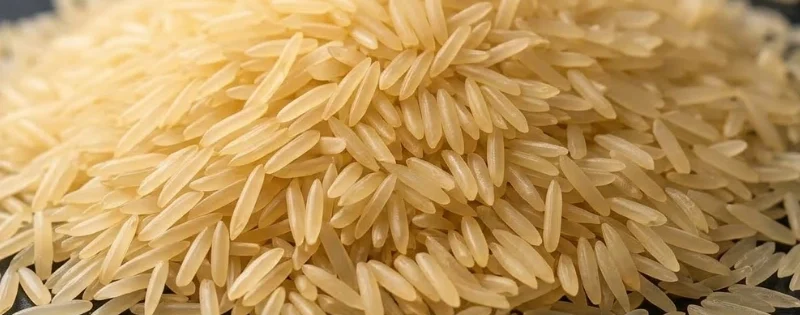
Visually stunning, its golden-amber kernels gleam post-polishing, with uniform length surpassing competitors like Pakistan’s Super Basmati (7.8mm). Aroma compounds like 2-acetyl-1-pyrroline deliver that signature pandan scent, retained even after cooking. Nutritionally, Sella processing retains 80% more vitamins (B1, B3) and minerals (iron, zinc) than raw rice, appealing to health-focused markets.
Taste tests by the Central Food Technological Research Institute (CFTRI) rate it highest for elongation ratio (2.5x), tenderness, and flavor persistence. Available in white Sella, golden Sella, and steam Sella grades, it caters to diverse palates while maintaining consistency across harvests.
The Sella Processing Advantage: Science Behind the Perfection
Sella (or parboiled) rice isn’t mere steaming it’s a four-step alchemy: soaking paddy (8-12 hours), steaming (high-pressure autoclaving), drying (to 14% moisture), and milling. This stabilizes the grain, preventing breakage during transport and cooking.
Benefits abound: Enhanced shelf life (2+ years without infestation), superior whiteness retention, and resistance to worms crucial for Middle Eastern imports stored in humid climates. Milling yield jumps 10-15%, slashing costs for buyers (priced at $1,200-$1,500/MT FOB). Studies from Punjab Agricultural University show Sella 1121 absorbs 30% less water, cooking in 10-12 minutes versus 18 for raw varieties.
Environmentally, it reduces water usage by 20% in farming (semi-dwarf plants) and post-harvest losses. For global buyers, this means fewer rejects, predictable logistics, and premium positioning.
Culinary Excellence: A Chef’s and Consumer’s Delight
No rice embodies versatility like 1121 Sella. In Gulf kitchens, its length shines in towering Mandi or Kabsa, where grains must stand tall under spices. European fusion chefs pair it with risottos or salads, leveraging its non-glutinous texture. In India, it’s the go-to for wedding feasts, elongating dramatically to impress guests.
Consumer panels in the UK and US praise its “melt-in-mouth” feel and subtle sweetness, scoring 9.2/10 in blind tests by Mintel. Low glycemic index (GI 50-55) suits diabetics, while its digestibility aids elders. Retail packs from brands like India Gate or Daawat fly off shelves, commanding 20-30% premiums over standard rice.
Economic and Supply Chain Superiority for Buyers
Why first choice economically? High yield and low breakage cut freight costs fewer bags needed per ton. India’s vast acreage (1.2 million hectares for 1121) ensures year-round supply, peaking October-December. Exporters in Karnal and Kurukshetra offer 50,000-ton capacities, with FSSAI, APEDA, and Halal certifications for seamless customs.
Pricing stability amid volatility (e.g., 2022 Ukraine war spikes) stems from government minimum export prices ($950/MT). Bulk buyers save via CIF deliveries to Jebel Ali or Rotterdam, with traceability QR codes verifying farm-to-fork origins. Compared to Thai Jasmine ($1,000/MT, shorter grains), 1121 Sella offers better value at similar prices.
Global Demand and Market Dominance
1121 Sella rules exports: Saudi Arabia (1.2M tons/year), UAE, Iraq, and Iran devour 70% of shipments for its cultural fit in rice-centric cuisines. Europe (UK, Germany) imports 500,000 tons for ethnic groceries, while the US sees growth via Hispanic and Asian communities.
Market forecasts by IMARC predict 7% CAGR to 2028, driven by urbanization and premiumization. Brands like Tilda and Veetee specify it exclusively, boosting resale values. In Africa and Australia, it’s gaining as a luxury staple.
Health and Nutritional Edge
Parboiling fortifies 1121 Sella naturally: 20% more protein (8g/100g), higher fiber for gut health, and antioxidants combating oxidative stress. Research in the Journal of Food Science highlights reduced arsenic leaching (50% less than raw rice). Organic variants, certified by NPOP, appeal to clean-label trends, with no GMOs or synthetics.
For wellness brands, it’s a powerhouse: gluten-free, vegan, and suitable for keto diets due to resistant starch.
Sustainability and Ethical Production
Eco-conscious buyers flock to 1121 Sella for its low footprint. Dwarf varieties yield 25-30 quintals/hectare with 30% less water via laser-land leveling. Exporters adopt SRI (System of Rice Intensification), cutting methane emissions 40%. Fairtrade sourcing empowers 50,000+ farmers, with rainwater harvesting in Punjab mitigating groundwater depletion.
Certifications like Rainforest Alliance ensure biodiversity protecting Himalayan foothills from monoculture. Blockchain traceability (e.g., IBM Food Trust pilots) verifies sustainable claims, vital for EU Deforestation Regulation compliance.
Challenges and How 1121 Sella Overcomes Them
Counterfeiting plagues Basmati, but 1121’s unique DNA markers (GI-tagged) and NIR spectroscopy sorting foil fakes. Climate change? Heat-tolerant hybrids and insured futures stabilize supply. Price hikes from duties (20%) are offset by volume efficiencies.
Quality dips in monsoons? Advanced dryers and silos maintain standards.
Future Trends: Innovation Driving Demand
Tomorrow’s 1121 Sella evolves: Quick-cook versions (5 minutes), fortified with quinoa blends, or aromatic-enhanced via biotech. Exports to China (post-FTA) and plant-based meat pairings signal expansion. AI milling optimizes grades, while carbon-neutral certifications lure ESG investors.
The Unrivaled Choice for Forward-Thinking Buyers
1121 Sella Basmati isn’t just rice it’s a symphony of length, aroma, nutrition, and reliability that captivates global palates and ledgers. Its Sella magic delivers cost savings, culinary triumphs, and sustainable prestige, outshining rivals in every metric. For wholesalers, retailers, and chefs, it’s the smart, scalable pick in a $6 billion market. Source it from certified Indian hubs, and elevate your offerings to world-class status. In the grain of excellence, 1121 Sella leads the harvest.