Rice can be regarded as one of the staple food crops consumed all around the world, linking the agricultural industry, food industry, and international market. Rice is a key product for both domestic consumption and the food industry and has an important impact on global food consumption. Buyers have become more interested in the quality of rice grain, processing procedures, packaging, and reliable supply chain.
India has a strategic place in the global rice trade due to a variety of rice types produced, well-established agricultural practices, and growing food processing industry in India. Professional suppliers are used by foreign buyers, wholesalers, distributors, and retailers when they purchase rice that should correspond to certain quality requirements and business conditions.
A reliable rice supplier not only delivers products but also helps its buyers keep regular purchases, know the varieties and meet the requirements of the purchasing process. Likewise, rice producers in India are a part of the industry through processing, sorting and packaging of their goods.
The Mahadev Overseas is one of the brands in the international agriculture commodity trade. Knowledge of the Indian rice industry may help the business to make right sourcing decisions.
India’s Rising Role in the World Rice Industry
India has built itself a reputation in the global rice industry due to its agriculture, processing facilities, and export channels. There are various regions where various types of rice are grown which have different grain size, texture, smell, and cooking properties.
Basmati rice, especially, is known because of its smell, long grain size, and unique texture when cooked. There is also non-basmati rice that is used for various purposes.
There are several reasons why India has become important in the rice industry:
- Diverse range of rice for different tastes.
- Existing agriculture and processing networks.
- A large scale of processing.
- Wide range of grain sizes and specifications.
- Experience in exporting to the international market.
This makes it easier for businesses to buy rice for retail, wholesale, catering, and food processing businesses.
Role of the Professional Rice Supplier in Detail
The professional rice supplier plays a vital role in connecting the rice producers, processors, exporters, wholesalers and foreign buyers of the product.
In the case of business purchases of rice in bulk, the supplier is one of the factors that will affect the procurement process.
The professional supplier normally puts into consideration certain key factors.
Product Range: The buyer might be in need of certain rice products depending on the market he wishes to sell to. The supplier provides detailed product descriptions to assist in proper selection.
Quality: The grain appearance, moisture content, cleanliness, and percentage of broken grains are some of the factors that are considered when assessing the quality of the rice.
Supply Chain Management: Consistent communication and proper organization of orders aid in inventory management.
Packaging: The packaging material and size required by different buyers might be different.
Business Communication: Specifications, quotations, documentation, and delivery of the product contribute to professional transactions.
For foreign buyers, dealing with an experienced rice supplier makes the whole process organized.
How Rice Manufacturers in India Ensure Quality Products
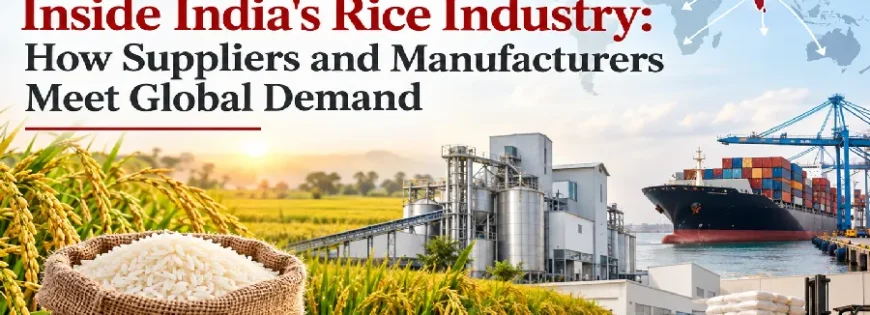
Rice production goes through various processing steps that convert harvested paddy to finished rice. Modern rice mills use special equipment to enhance efficiency in processing and ensure quality of their products.
Steps in the process include the following:
Paddy Cleaning
The harvested paddy is cleaned to remove any dirt, stones, straw, and other impurities in preparation for further processing.
Dehusking
The husk of the paddy is stripped off to get brown rice. Special machines need to be used to avoid unnecessary breaking of the grains.
Whitening and Polishing
Depending on the type of product that is being made, the brown rice may be whitened and polished.
Grading and Sorting
Various types of rice will be sorted based on their sizes and length of grains. Grading helps in preparing various types of products.
Quality Inspection
The rice will be inspected to check the uniformity, percentage of breakage, foreign matters and moisture among other aspects. This ensures that the product meets the required specifications.
The above information explains how professional rice manufacturers in India are significant in the entire agricultural value chain.
Popular Types of Rice Available in India
There are many types of rice available in India that cater to different cuisines and industrial uses. Knowing about their characteristics will help buyers to buy suitable products.
Basmati Rice
Basmati rice is characterized by its elongated grains and unique aroma. It is used widely for preparing biryani and pulao among others.
Non-Basmati Rice
Non-basmati rice comes in various forms that differ on the basis of grain size, texture and cooking behavior. Non-basmati rice is consumed domestically as well as industrially.
Sella Rice
Sella rice is the type of rice that is pre-boiled before being milled. The procedure affects the characteristics of the rice grains. There are various types of sella rice available.
Broken Rice
Broken rice refers to rice grains that have broken down during processing. It is used in various ways depending on its grades and suitability.
Each type comes with its own set of demand and supply requirements, therefore it is important to have knowledge about products.
Reasons Why International Buyers Prefer Indian Rice
Indian rice is preferred by international buyers due to its variety, existing rice-processing industry, and availability via commercial channels.
Market segments have their unique food tastes. Long grain aromatic rice might be desired by one set of buyers, whereas some buyers might need economic rice varieties for daily consumption and food production purposes.
The Indian rice industry could meet such diverse needs using diverse rice grades and categories.
Some other factors include:
- Variety of rice available.
- Difference in grain sizes and qualities.
- Possibilities of commercial packing.
- Existing export channels.
- Wholesale/bulk buying options.
But the buyer must conduct a product inspection, quality specification analysis, documentation process, and other related requirements for the destination country before making the final decision.
Essential Considerations While Selecting Rice Manufacturing Companies in India
Selection of a manufacturer is a crucial step for importers, distributors, and wholesalers. The selected manufacturer must have knowledge about buyer needs and ability to articulate product specifications.
Some considerations in this regard include:
Manufacturing Facilities: Evaluate the existing facilities for processing of rice including cleaning, grading, sorting and packaging equipment.
Product Specifications: Make sure that the product specification including type of rice, grain length, moisture content, broken grains etc is confirmed by the manufacturer.
Quality Management: Inquire about inspection and whether appropriate quality documentation or certification is possible.
Packaging Needs: It includes discussion about bags’ size, packaging material, labeling and branding needs etc.
Export Documentation: Commercial Invoice, Packing List, Certificate of Origin etc will be required for international orders depending upon destination country.
Order Planning: Minimum quantity of order, production and shipment schedule will also be discussed.
Careful evaluations allow purchasers to lower their procurement risks and build better business relationships.
Mahadev Overseas: Rice Trade in Relation to International Business Opportunities
Mahadev Overseas is an example of a business brand that is related to the agricultural commodity and international trading industry. In relation to rice trade, there is a need for comprehension of product requirements, communication, and reliable relations between the buyer and seller.
While looking for rice sourcing possibilities, elements like grain quality, product specification, packaging, pricing, and shipping coordination should be kept in mind while selecting a rice supplier.
There is also a need to know the market expectations of the buyer in a professional approach to international trade. Buyers may require certain requirements from suppliers such as varieties of rice, grain size, labeling, packaging, and importing documentations.
Mahadev Overseas may be positioned in a larger business context in terms of communication and the significance of quality-based agricultural sourcing.
In order to do business with the brand, it is necessary to find out what kinds of rice products the company currently offers.
Technology in the Processing of Rice
The use of technology in the processing of rice is getting better and better in terms of enhancing the efficiency of the production process and maintaining the quality of the product.
Optical colour sorters provide one good example. Optical colour sorters apply detection systems to segregate discoloured or faulty grains depending on the preset conditions.
Modern weighing and packaging machines can assist in achieving better results in terms of packaging.
Effective digital inventory systems and better processing machinery enable the manufacturer to deal with large amounts of products.
With the further development of technology, the producers of rice will be able to achieve better control of the production process and its efficient organization.
The Future of the Rice Industry in India
The future of the rice industry in India will rely on the ability of the industry to manage its rising global demands through effective production, sustainable farming practices, and customer needs.
The growing interest in buyers’ needs in terms of quality, transparency, and reliable logistics will provide great benefits to manufacturers and suppliers who can adapt to them.
Sustainable water use, advanced farming techniques, improvements in rice storage, and advancements in the milling process will continue being important development sectors.
International companies can benefit from forming connections with reliable rice suppliers in India to gain access to various products according to the changing needs of the market.
The rice industry in India includes a variety of farmers, processors, manufacturers, suppliers, and exporters. Different types of rice from regular non-Basmati to high-quality Basmati will offer a lot to the food business across the globe.
It is necessary to carefully consider various factors such as quality of grains, specifications of the product, packaging, communication, and continuity of supply in choosing the best supplier for rice. Similarly, experienced rice producers in India are contributing to the growth of the rice industry through the use of advanced processing methods and quality control systems to produce rice.
Mahadev Overseas is related to the agricultural commodities international trade sector, which emphasizes the importance of reliable sources and trading partners. Business organizations can forge connections in the Indian rice industry by considering market expectations and maintaining product quality.