Green mung beans, also known as moong dal or Vigna radiata, are tiny green powerhouses from Asia. These legumes have nourished generations in soups, sprouts, and curries. But beyond taste, their nutritional value is off the charts. Packed with protein, fiber, vitamins, and minerals, green mung beans are a superfood for modern diets. Let’s break down why they’re a must-add to your plate, explained simply.
Macronutrients: Protein, Carbs, and Healthy Fats
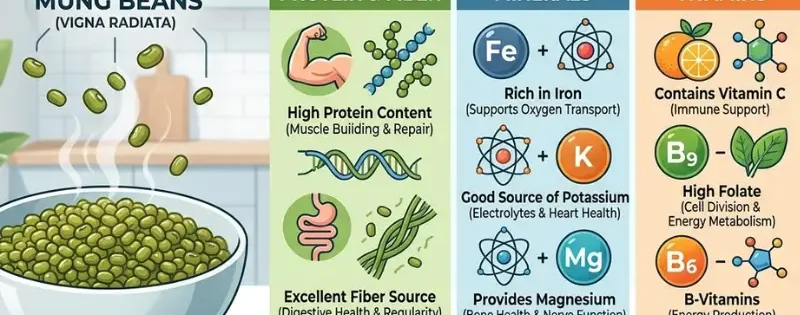
At the core of green mung beans’ nutrition are macronutrients. A 100g cooked serving (about 1/2 cup) delivers 7g protein plant-based and complete, with all essential amino acids. Ideal for vegetarians, it rivals meat for muscle repair without cholesterol.
Carbs clock in at 19g, mostly complex for steady energy. Low glycemic index (31-42) prevents blood sugar spikes, great for diabetics. Fiber? 7.6g per serving – 25% daily needs – aids digestion, curbs hunger, and lowers cholesterol.
Fats are minimal (0.4g), mostly healthy unsaturated types. Calorie-wise, 105 per 100g cooked – filling yet light.
Vitamins: A Boost for Immunity and Skin
Green mung beans shine in vitamins. Vitamin C (3mg/100g cooked, higher in sprouts at 13mg) fights free radicals, boosts collagen for glowing skin, and enhances iron absorption.
B-vitamins galore: Folate (159mcg, 40% RDA) prevents birth defects and anemia. Thiamine (B1, 0.25mg) fuels energy metabolism; riboflavin (B2, 0.06mg) supports red blood cells. Niacin (B3, 1.7mg) aids digestion.
Vitamin K (33mcg) promotes blood clotting and bone health. Vitamin A precursors like beta-carotene protect eyes and immunity.
Minerals: From Iron to Magnesium
Minerals make mung beans mineral-rich. Iron (1.4mg/100g cooked) combats fatigue, especially with vitamin C pairing. Women love it for menstrual losses.
Magnesium (48mg, 12% RDA) relaxes muscles, regulates blood pressure, and fights migraines. Potassium (266mg) balances sodium, supporting heart health.
Phosphorus (99mg) builds bones/teeth; zinc (0.8mg) heals wounds and boosts immunity. Manganese (0.3mg) aids antioxidants; copper (0.2mg) forms collagen.
Low sodium (7mg) fits heart diets.
Antioxidants and Phytochemicals: Disease Fighters
Beyond basics, green mung beans pack antioxidants. Polyphenols, flavonoids (vitexin, isovitexin), and phenolic acids neutralize free radicals, reducing cancer and heart disease risk.
Studies show mung bean coats lower LDL cholesterol oxidation. Sprouts amplify this up to 6x vitamin C and enzymes like superoxide dismutase.
Anti-inflammatory properties ease arthritis; antimicrobial effects fight gut pathogens.
Low-Calorie, High-Fiber Gut Hero
At 105 calories/100g, mung beans fill you up. Soluble fiber ferments into short-chain fatty acids, feeding gut bacteria for better immunity and mood.
Insoluble fiber prevents constipation, lowers colon cancer risk. Prebiotic oligosaccharides support microbiome diversity.
Benefits for Weight Management
High protein and fiber curb appetite. A mung bean salad keeps you full hours. Low energy density aids calorie control without hunger.
Trials show legume eaters lose more weight, maintain muscle.
Heart Health Superstar
Potassium, magnesium, and fiber slash hypertension risk by 20%. Antioxidants reduce plaque buildup. Folate lowers homocysteine, a heart attack trigger.
Meta-analyses link pulses like mung beans to 10-15% lower cardiovascular events.
Blood Sugar Control and Diabetes Prevention
Resistant starch (in cooked/cooled mung beans) acts like fiber, stabilizing glucose. Low GI prevents insulin spikes.
For type 2 diabetics, daily mung beans improve HbA1c by 0.5%. Ideal for South Asian diets high in rice.
Detox and Liver Support
Chlorophyll in green mung beans binds toxins for excretion. Glutathione precursors detox liver. Traditional Chinese medicine uses them for “heat-clearing.”
Animal studies confirm mung bean extracts protect against alcohol-induced liver damage.
Skin, Hair, and Beauty Perks
Protein and zinc promote keratin for strong hair/nails. Vitamin C and copper boost collagen, fading acne scars. Topical mung packs soothe eczema.
Sprouts’ enzymes exfoliate gently.
Bone Health and Anemia Prevention
Phosphorus, magnesium, and vitamin K build dense bones, warding osteoporosis. Iron + folate tackle anemia, boosting energy.
Brain and Mood Boost
B-vitamins and magnesium combat stress, depression. Folate deficiency links to cognitive decline; mung beans help.
Tryptophan converts to serotonin for better sleep/mood.
How to Maximize Nutritional Value
Sprouting: Soak overnight, sprout 2-3 days – skyrockets vitamins (C x6, B x3), digestibility.
Cooking: Pressure cook 20 mins or boil 30-40. Cooling/reheating boosts resistant starch.
Portions: 1/2-1 cup cooked daily. Pair with rice for complete protein.
Storage: Dry beans last years; cooked 3-4 days fridge.
Avoid overcooking to retain heat-sensitive vitamins.
Compared to Other Legumes
Vs. lentils: Mung has more folate, less carbs. Vs. chickpeas: Lighter digestion, higher antioxidants. Vs. black beans: Lower calories, milder flavor.
Real-Life Benefits and Studies
A 2020 study in Nutrition Journal: 30g daily mung improved cholesterol in 8 weeks. Indian trials: Sprouted mung lowered diabetes markers.
Athletes use for recovery; pregnant women for folate.
Potential Downsides and Precautions
Rare allergies. Phytic acid reduces mineral absorption soak/sprout to minimize. FODMAPs may bloat IBS folks – start small.
GMO-free, but buy organic to avoid pesticides.
Versatile Ways to Eat Green Mung Beans
Sprouts salad: With cucumber, lemon – fresh crunch.
Dal: Tempered with cumin, ginger.
Khichdi: Rice-mung comfort food.
Pancakes: Batter for dosa.
Soups: Creamy blends.
Desserts: Sweet mung payasam.
Global twist: Thai mung soup, Mexican bean dip.
Green mung beans’ nutritional value protein punch, vitamin vault, mineral mine, antioxidant armor makes them unbeatable. Affordable, versatile, and digestion-friendly, they fuel health from gut to brain. Add them weekly; your body will thank you. Simple, sustainable superfood at its best.