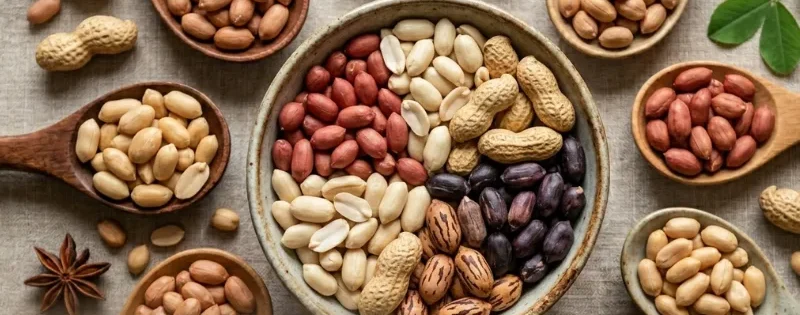
Few agricultural commodities are as globally traded, as versatile in application, and as deeply rooted in Indian farming tradition as the peanut. Known variously as groundnuts, monkey nuts, or earthnuts depending on where you are in the world, peanuts are a staple ingredient across food manufacturing, confectionery, snacking, edible oil production, and animal feed industries worldwide.
India sits at the very centre of this global trade. It is consistently one of the world’s top three peanut producing countries, growing hundreds of thousands of tonnes annually across several states, and exporting to buyers in more than 80 countries. The combination of competitive pricing, diverse product formats, an established milling and processing industry, and a large number of experienced exporters makes India one of the most attractive sourcing origins for peanuts anywhere in the world.
But the peanut market in India is also large and uneven. Quality standards vary significantly between suppliers. Aflatoxin contamination the most serious risk in peanut sourcing is a real and recurring issue that claims shipments and damages business relationships every year. And the sheer number of traders, brokers, and manufacturers operating in the space makes it genuinely challenging to identify a reliable long-term supply partner.
This guide is written for buyers importers, food manufacturers, wholesalers, and brands who want to source peanuts from India intelligently. By the end, you will understand the product range, the quality benchmarks that matter, the certifications to verify, and the practical steps that separate a good sourcing decision from an expensive one.
Why India Is a Leading Peanuts Supplier Globally
India’s position as one of the world’s most significant peanut producing nations is not accidental. It is the result of geography, climate, agricultural tradition, and decades of investment in processing and export infrastructure.
The country’s peanut belt runs primarily through the states of Gujarat, Rajasthan, Andhra Pradesh, Tamil Nadu, Karnataka, and Maharashtra. Gujarat alone accounts for a substantial share of national production and is home to many of India’s largest and most export-oriented peanut processing facilities. The climate across these regions warm temperatures, sandy loam soils, and well-distributed rainfall creates near-ideal growing conditions for groundnuts.
India produces peanuts across two main cropping seasons. The Kharif crop, harvested between October and December, is the larger of the two and drives the majority of export supply. The Rabi crop, harvested between February and April, is smaller but fills the supply gap and keeps pricing relatively stable across the year.
For international buyers, this seasonal pattern matters. Understanding crop calendars helps with forward planning, price negotiation, and avoiding the compressed demand periods when multiple buyers are chasing limited fresh-crop availability simultaneously.
Beyond production volume, India offers buyers a complete processing ecosystem. Raw peanuts can be sourced, but so can blanched peanuts, roasted peanuts, split peanuts, peanut flour, peanut butter, and groundnut oil often from the same facility. This vertical capability is a meaningful advantage for buyers who want to consolidate their supplier base.
Types of Peanuts Available from Indian Suppliers
Understanding the different types and formats of peanuts available from Indian suppliers is the foundation of a clear product specification and a clear product specification is the foundation of successful sourcing.
Bold Peanuts (Virginia Type)
Bold peanuts are the larger variety, with a rounder, plumper kernel. They are primarily used in the confectionery and snacking industries coated peanuts, peanut brittle, roasted and salted snacks, and retail snack packs. Their size and visual appeal make them the preferred choice for products where the peanut is the feature ingredient rather than a background component.
India exports significant volumes of bold peanuts, particularly from Gujarat. They are typically sorted to count sizes 38/42, 40/50, 50/60, 60/70 per ounce which specifies the number of kernels per ounce and directly relates to the kernel size. Larger counts (38/42) command premium prices; smaller counts are more economical and widely used.
Java Peanuts (Spanish Type)
Java peanuts are smaller, more oval in shape, and have a slightly higher oil content than bold peanuts. They are widely used in peanut butter production, groundnut oil extraction, and food processing applications where size is less important than oil content and consistency.
Java peanuts are generally more economical than bold peanuts and are available in large volumes from Indian suppliers. For buyers focused on processing applications rather than whole-nut presentation, Java peanuts often deliver better value.
TJ (Red Natal) Peanuts
TJ variety peanuts are a medium-sized, high-oil content variety popular in certain African export markets. They have a distinctive reddish skin and are used in both edible and oil extraction applications. Indian suppliers in Andhra Pradesh and Karnataka produce and export this variety in meaningful volumes.
Processing Formats
Beyond variety, buyers need to specify the processing format they require:
Raw Peanuts (In-Shell or Shelled): The least processed form. In-shell peanuts are used in direct consumption markets. Shelled raw peanuts are the most common starting point for further processing and the most widely traded internationally.
Blanched Peanuts: The red skin is removed after a brief heat and moisture treatment, revealing the cream-white kernel beneath. Blanched peanuts are essential for peanut butter production, baking applications, and markets where the skin-on appearance is undesirable.
Roasted Peanuts: Dry-roasted or oil-roasted, these are ready for direct consumption or further processing into snack products. Many Indian peanut suppliers India offer in-house roasting and seasoning capabilities.
Split Peanuts: Kernels split into two halves, typically used in confectionery, bakery toppings, and certain snack applications where a half-kernel is the desired format.
Peanut Flour: Defatted peanut flour is increasingly used in protein-enriched food products, gluten-free baking, and nutritional supplements. Demand has grown substantially alongside the health food movement.
Groundnut Oil: Cold-pressed or refined groundnut oil is a separate product line but often available from integrated suppliers who process both edible kernels and oil-grade peanuts.
The Most Important Quality Issue in Peanut Sourcing: Aflatoxin
No discussion of peanut sourcing from India or anywhere is complete without a serious conversation about aflatoxin.
Aflatoxins are naturally occurring mycotoxins produced by certain moulds, primarily Aspergillus flavus and Aspergillus parasiticus, that grow on peanuts during cultivation, harvesting, storage, or transit under conditions of high humidity and warm temperatures. They are highly toxic, classified as Group 1 carcinogens by the World Health Organization, and are subject to strict regulatory limits in virtually every food import market globally.
The European Union has some of the tightest aflatoxin limits in the world 2 ppb (parts per billion) for B1 and 4 ppb total for peanuts intended for direct human consumption. The United States FDA sets action levels at 20 ppb total. Many importing countries in the Middle East and Asia apply similar or even stricter standards.
Aflatoxin contamination is one of the most common reasons Indian peanut shipments are rejected at ports of entry particularly in the EU, where Border Inspection Post (BIP) rejections of Indian peanuts appear in the RASFF (Rapid Alert System for Food and Feed) database with concerning regularity.
For buyers, this means aflatoxin testing is not optional. It is the single most important quality check in peanut procurement.
A responsible peanuts supplier in India will test every batch for aflatoxin before shipment, provide a Certificate of Analysis (CoA) from an accredited laboratory, and have documented procedures for controlling moisture and storage conditions throughout their supply chain. Suppliers who are reluctant to provide aflatoxin test results or who cannot demonstrate systematic quality control processes should be avoided entirely.
Quality Standards and Certifications That Matter
Beyond aflatoxin, serious peanut buyers look for a range of documented quality standards when evaluating a potential supplier.
FSSAI Certification
Every food manufacturer and exporter in India must be registered with or licensed by the Food Safety and Standards Authority of India (FSSAI). For a peanuts supplier operating in India, FSSAI licensing is the absolute baseline. Buyers should request and verify the FSSAI license number through the official FSSAI portal.
APEDA Registration
The Agricultural and Processed Food Products Export Development Authority (APEDA) is the regulatory body overseeing agricultural exports from India. Any peanut exporter in India must be registered with APEDA. This registration confirms that the supplier is legally authorized to export and has met the baseline export quality requirements. Always verify APEDA registration before engaging a new supplier.
ISO 22000 and HACCP
ISO 22000 is the international standard for food safety management systems. HACCP (Hazard Analysis and Critical Control Points) is a systematic approach to identifying and controlling food safety hazards in the production process. Together, these certifications indicate that a supplier has documented, audited systems for producing safe food not just a verbal commitment to quality.
For buyers supplying regulated markets particularly Europe, North America, Japan, and Australia ISO 22000 and HACCP certification from their peanut supplier is increasingly a commercial requirement rather than a preference.
EU and US Organic Certifications
For buyers sourcing organic peanuts, the relevant certifications depend on the destination market. NPOP (National Programme for Organic Production) is India’s domestic organic standard. For export to the EU, suppliers need EC 834/2007 compliance certification. For the US market, USDA NOP (National Organic Program) certification is required. Always verify that the certification covers the specific product and lot you are purchasing not just the facility in general.
Halal and Kosher Certifications
For buyers supplying markets in the Middle East, Southeast Asia, or Jewish communities globally, Halal and Kosher certifications respectively are required. Several established Indian peanut exporters hold these certifications alongside their food safety credentials.
How to Find and Evaluate a Peanuts Supplier in India
With thousands of suppliers operating across Gujarat, Andhra Pradesh, and other producing states, the challenge for buyers is not finding suppliers it is finding the right one.
Define Your Specification First
Before you begin any supplier conversations, document exactly what you need: peanut variety (bold, java, TJ), processing format (raw, blanched, roasted, split), count size or grade, maximum acceptable aflatoxin level, moisture content specification, broken kernel percentage tolerance, annual volume requirement, packaging format, and certifications required by your market. The more clearly you define this upfront, the more effectively you can filter suppliers.
Use Trade Directories as a Starting Point But Verify Everything
Platforms such as India MART, Trade India, and the APEDA exporter directory list thousands of peanut suppliers. These are useful first filters but should not be treated as verified quality references. Cross-check every supplier’s FSSAI and APEDA registration independently. Ask for company documents Certificate of Incorporation, bank details, export history.
Request Samples and Test Them Independently
Never commit to a commercial order without first obtaining samples and having them tested by an independent, accredited laboratory. Test for aflatoxin, moisture content, broken percentage, and any pesticide residues relevant to your destination market. The cost of independent testing is trivial compared to the cost of a rejected shipment or a product recall.
Ask for Certificates of Analysis from Previous Shipments
A credible peanuts supplier in India should be able to share CoA documents from recent shipments not just from the sample you specifically requested. Reviewing multiple CoAs gives you a picture of the supplier’s consistency over time, which is ultimately what matters in a long-term supply relationship.
Conduct a Supplier Audit or Factory Visit
For significant sourcing relationships, an on-site audit is worth every rupee of travel cost. Walk the facility. Look at storage conditions is the warehouse dry, well-ventilated, and free of visible mould? Are peanuts stored off the ground? Is moisture monitored? How are rejected lots handled? These physical observations tell you more about a supplier’s quality commitment than any certification document.
Start with a Trial Shipment
Before signing a long-term contract, place a trial order of modest volume. Evaluate the product quality against specification, the accuracy of documentation, the communication quality during the transaction, and whether the shipment arrives on time and in good condition. These early signals are highly predictive of what the long-term relationship will look like.
Common Sourcing Mistakes to Avoid
Even experienced procurement teams make preventable errors in peanut sourcing. Here are the most costly ones.
Choosing price over quality verification: A significantly lower quote almost always signals a lower-grade product higher aflatoxin risk, more moisture, more broken kernels. Price comparison is only meaningful between suppliers offering verified equivalent specifications.
Skipping independent aflatoxin testing: Supplier-provided test results are useful but not sufficient. Always supplement them with independent laboratory testing, especially for shipments destined for the EU, US, or other tightly regulated markets.
Not specifying moisture content in the contract: Moisture above 9% in shelled peanuts significantly increases aflatoxin risk during storage and transit. This should be a contractual specification, not an informal understanding.
Assuming one good shipment means consistent quality: Peanut quality varies between crop seasons, between growing regions within India, and even between lots within the same season. Continuous monitoring and testing across shipments is essential not a one-time exercise.
Working through too many intermediaries: Every layer between you and the actual processing facility adds cost and reduces accountability. Where possible, work directly with manufacturers or exporters who own their processing infrastructure rather than trading companies who are buying and selling on behalf of unnamed mills.
India’s peanut industry is capable of supplying world-class product to virtually any market in the world but only when buyers engage with it intelligently. The suppliers who will serve you best are those who invest in proper processing equipment, systematic quality control, rigorous aflatoxin management, and transparent communication.
Finding them requires preparation, patience, and a willingness to do the verification work upfront rather than discovering problems when a container arrives at port.