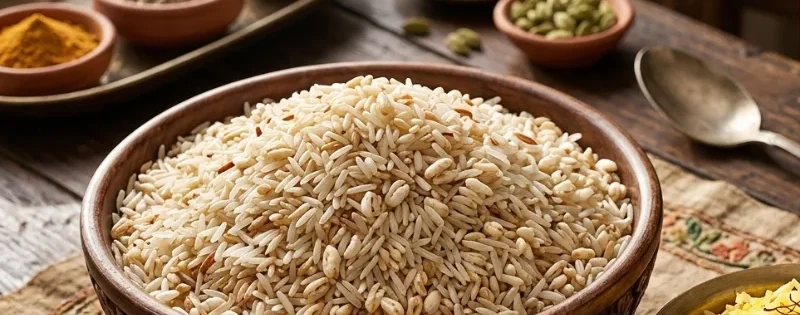
The Middle East imports more rice than almost any other region on earth. Countries like Saudi Arabia, the UAE, Iran, Iraq, Kuwait, Qatar, Bahrain, and Oman have populations that consume rice as a daily dietary staple and virtually none of them produce meaningful quantities of it domestically. Every grain on the table arrives from somewhere else, and for decades, a very large share of it has arrived from India.
This is not a coincidence or a matter of proximity alone. Rice manufacturers in India have spent years understanding what Middle Eastern buyers actually want the specific varieties, the exact grain length preferences, the packaging formats that move well in local retail, and the logistics arrangements that keep supply consistent even during periods of high demand. The result is a trade relationship that is deeply embedded in the food supply chains of multiple nations and continues to grow.
For importers, distributors, and retail buyers operating in the Middle East, understanding why Indian rice dominates their market and what separates the suppliers who perform well from those who do not is practical knowledge that directly affects sourcing decisions. This guide covers all of it.
Why the Middle East Relies Heavily on Indian Rice
The cultural and culinary centrality of rice in the Middle East is inseparable from the story of Indian rice exports. Dishes like biryani, kabsa, mandi, machboos, and plain steamed rice with stews are eaten daily across the region. For these dishes, the rice variety matters enormously. The grain must elongate properly when cooked, remain separate rather than clumping, carry the right aroma, and hold texture through the cooking process.
Basmati rice which India produces in greater volume and quality than any other country is precisely the variety that delivers all of these characteristics. Its long grain, distinctive fragrance, and non-sticky cooked texture make it the preferred choice for premium rice applications across Saudi Arabia, the UAE, and the Gulf states. India’s dominance in basmati production is not just about quantity. It is about the specific quality that Middle Eastern consumers have built their culinary expectations around over generations.
Beyond basmati, non-basmati parboiled rice varieties from India serve a significant portion of the lower-price-point market across the region particularly in countries with large South Asian expatriate populations who are accustomed to specific Indian varieties from their home states.
What Middle Eastern Buyers Actually Want From a Rice Supplier
Grain Length and Cooking Performance
Middle Eastern buyers whether they are large importers, wholesale distributors, or retail chains are highly specific about grain specification. For basmati, the raw grain length is important, but what matters most is the cooked elongation. A premium basmati variety like Pusa 1121 should elongate to 20–22mm when cooked, producing the visually impressive long grains that signal quality in the retail and foodservice market.
This performance consistency is why buyers return to the same rice supplier in India year after year. A shipment that delivers the expected grain length and cooking quality builds trust. A shipment that falls short through lower-grade variety substitution or inadequate ageing of the paddy damages the relationship quickly and permanently in a market where importer reputation with their downstream customers is everything.
Aroma and Freshness
Basmati rice loses its characteristic aroma over time if stored incorrectly. The volatile aromatic compounds responsible for its fragrance are sensitive to heat, moisture, and oxygen exposure. A rice exporter from India who takes post-harvest storage seriously maintaining correct temperature and humidity in the warehouse, managing stock rotation carefully delivers product that retains its aroma through the export journey and arrives at the destination market smelling as it should.
Middle Eastern buyers, particularly in the premium segment, can and do assess aroma quality directly when evaluating new suppliers or incoming shipments. An Indian rice supplier who understands this and manages it proactively is demonstrating the level of attention to product quality that builds long-term export relationships.
Consistency Across Shipments
One of the most common complaints from Middle Eastern importers about their rice suppliers is inconsistency. The sample that secured the contract performed beautifully. The first shipment was acceptable. By the third or fourth shipment, the broken grain percentage had crept up, or the colour had shifted, or the moisture content was higher than specified.
This inconsistency almost always traces back to the supplier’s raw material procurement practices buying paddy from multiple sources without consistent quality controls, or blending lower-grade material into shipments when crop conditions tighten. A rice manufacturer in India with a structured procurement relationship with specific farms or procurement mandis and a rigorous incoming material testing regime produces far more consistent output across shipments than one buying on the spot market each season.
Packaging Preferences in the Middle East Market
Packaging is not a secondary consideration for Middle Eastern rice buyers. It is a front-line marketing decision that directly affects shelf appeal, brand positioning, and retail sell-through rates.
Retail Pack Sizes and Formats
The dominant retail pack sizes in Gulf markets are 5kg, 10kg, and 20kg. The 5kg pack is the standard for premium basmati positioned at the household consumer. The 10kg and 20kg packs serve larger households, restaurants, and catering operations. Some markets also have demand for 2kg packs in the premium segment and 50kg bags for the wholesale and foodservice channel.
The packaging material used for premium basmati in the Middle East is almost exclusively woven polypropylene with a BOPP laminated outer surface. The printed quality needs to be high vibrant colours, clear product photography, and legible Arabic and English text are all standard expectations. A rice supplier in India supplying the Gulf retail market who provides only basic jute or plain woven bags is not meeting the visual standards that the market requires.
Brand and Private Label Packaging
A significant portion of Indian rice sold in the Middle East carries local distributor or retailer branding rather than the manufacturer’s own brand. Private label rice where an Indian manufacturer produces, mills, and packages rice under a brand name specified by the importer accounts for a substantial share of premium basmati sales across the region.
For rice manufacturers in India who can accommodate private label production, this represents a meaningful opportunity. The importer benefits from brand ownership and margin control. The manufacturer benefits from volume commitments and a stable buyer relationship. The arrangement works best when the manufacturer has dedicated packaging printing capability and can manage short-to-medium print runs without excessive setup costs.
Halal Certification and Arabic Labelling
Every rice product sold in GCC markets must carry Arabic language labelling covering product name, variety, country of origin, net weight, nutritional information, and best-before date. This is a regulatory requirement, not an optional addition. A rice exporter from India supplying the Gulf for the first time sometimes underestimates the specificity of these requirements and shipments that arrive with incomplete or incorrect labelling face clearance delays or rejection at the port.
Halal certification is standard for food products in GCC markets. For rice a naturally plant-based product Halal certification is straightforward to obtain but still required by many importers as part of their standard documentation package. Established Indian rice exporters carry this certification as a matter of course.
Logistics and Supply Chain Considerations
Shipping Routes and Transit Times
The geographical proximity of India to the Middle East is one of the factors that gives rice manufacturers in India a structural advantage over competitors from Thailand, Vietnam, or Pakistan on certain trade routes. Major Indian ports JNPT Mumbai, Mundra in Gujarat, Kakinada in Andhra Pradesh, and Chennai have regular container and bulk vessel services to Gulf ports including Jebel Ali (Dubai), Dammam (Saudi Arabia), Shuwaikh (Kuwait), and Muscat (Oman).
Transit times from Indian west coast ports to the Gulf are typically between five and twelve days depending on the routing and port of discharge. This relatively short transit window helps preserve rice quality particularly important for aromatic basmati where extended time in container conditions can affect fragrance and allows importers to maintain leaner inventory levels compared to sourcing from more distant origins.
Documentation Requirements for Gulf Imports
The documentation package for rice exports to GCC countries is more detailed than for some other export destinations. Standard requirements include a commercial invoice, packing list, bill of lading, certificate of origin (typically issued through the relevant Indian chamber of commerce), phytosanitary certificate from NPPO India, and fumigation certificate confirming the cargo has been treated against storage pests.
Saudi Arabia additionally requires a SASO (Saudi Standards, Metrology and Quality Organization) certificate of conformity for food products. The UAE Food Control Authority has its own import requirements. An experienced rice supplier in India who exports regularly to the Gulf will have a freight forwarding partner familiar with all of these requirements and will manage the documentation process without it becoming a burden on the buyer.
Handling Currency and Payment Terms
Most Indian rice exporters to the Middle East transact in US dollars. Standard payment terms for established relationships are either documents against payment (DP) or a letter of credit (LC) at sight. For new relationships, a confirmed irrevocable LC from a reputable Gulf bank provides the security that most Indian manufacturers require before committing production capacity to an export order.
As buyer-supplier relationships mature and payment history builds, many Indian exporters move to open account terms with their most trusted Middle Eastern partners reducing transaction friction and allowing faster order processing, which matters during peak demand periods before Ramadan and Eid, when rice procurement volumes across the region spike significantly.
India’s position in the Middle East rice market has been earned through product quality, supply reliability, and a genuine understanding of what buyers in the region need not just in terms of grain specification, but in packaging presentation, documentation accuracy, and logistics dependability.
For a rice exporter from India looking to build or strengthen their Gulf business, the message from this market is consistent: buyers are loyal to suppliers who deliver what they promise, shipment after shipment, season after season. And for Middle Eastern importers evaluating new suppliers, the depth of India’s rice manufacturing sector means there are genuine world-class options available provided the evaluation process goes beyond price comparison to verify quality systems, export track record, and supply chain reliability.
The trade relationship between Indian rice and the Middle East table is one of the most durable in global food commerce. The suppliers who understand why it works are the ones who keep it that way.