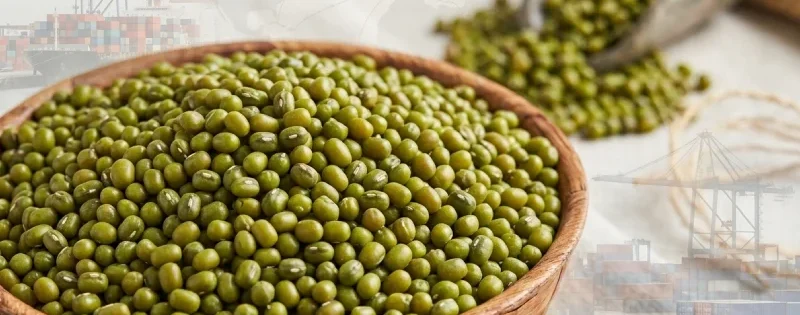
If you’ve ever sourced pulses for a food business, chances are you’ve come across Indian suppliers more often than any other origin. That’s not a coincidence. India isn’t just a major player in the global mung bean trade it’s the dominant one, growing more of this crop than any other country on earth by a wide margin.
But why India, specifically? Plenty of countries have warm climates and agricultural land suited to legumes. So what actually explains India’s grip on global mung bean production and export?
The answer is a mix of geography, farming tradition, government policy, and sheer scale and it’s worth understanding if you’re sourcing green mung beans for your business or just curious about where your food actually comes from.
Just How Big Is India’s Share of Global Production?
The numbers make the picture pretty clear. India accounts for roughly half of the world’s total mung bean output, with production running in the range of 3 to nearly 4 million tons annually in recent years. No other producing country comes close to that volume.
Myanmar and China follow as the next largest producers, but both operate on a noticeably smaller scale. Vietnam and Thailand round out the list of significant producers, though their combined output is still a fraction of India’s.
This scale matters for buyers. When a crop is produced this widely across so many regions of one country, supply tends to stay more consistent year over year, even when individual regions face weather setbacks. That reliability is part of why so many international buyers default to Indian suppliers first.
The Climate Advantage: Why India’s Land Suits This Crop So Well
Mung beans are a warm-season legume, and they thrive in conditions that a lot of India’s agricultural land naturally provides hot temperatures, moderate rainfall, and well-drained soil. States like Rajasthan, Maharashtra, Madhya Pradesh, and Gujarat produce the bulk of the country’s crop, and each brings slightly different growing conditions to the table.
What really sets India apart, though, is the growing season flexibility. Mung beans in India are typically grown across two distinct cropping windows the kharif season, which follows the monsoon rains, and a shorter summer or “zaid” season in certain regions. This means farmers aren’t limited to a single annual harvest window the way many other producing countries are.
That double-cropping capacity effectively increases total national output without requiring more farmland, which is a meaningful advantage when you’re trying to explain why India so consistently outproduces everyone else.
A Deep-Rooted Farming Tradition
Mung beans, known locally as moong, aren’t a recently adopted cash crop in India they’ve been cultivated and eaten there for thousands of years. That long history means Indian farmers have accumulated generations of practical knowledge about crop rotation, soil management, and pest control specific to this legume.
This matters more than people sometimes realize. Mung beans are also valued in India as a rotation crop, planted between other staples like wheat and rice because they fix nitrogen back into the soil. Farmers grow them not just for the harvest itself, but because they genuinely improve the land for whatever comes next.
That built-in incentive keeps mung bean cultivation woven into everyday farming practices across huge swaths of the country, rather than being treated as a niche or optional crop.
Domestic Demand Creates a Strong Production Base
One reason India’s mung bean industry is so robust is that the crop isn’t grown primarily for export in the first place it’s a genuine dietary staple. Moong dal, sprouted mung beans, and mung bean flour show up constantly in Indian households, from daily meals to festival dishes.
This built-in domestic demand means the infrastructure for growing, processing, and distributing mung beans at scale already exists independent of the export market. Mills, storage facilities, grading systems, and trader networks were established to serve Indian consumers long before international buyers became a significant part of the equation.
When export demand grows, that existing infrastructure can absorb and scale with it far more easily than it could in a country building an export-focused pulse industry from scratch.
India’s Shift Toward Net Exporter Status
For years, India actually imported a portion of its mung bean and pulse needs to cover gaps between domestic production and consumption. That’s shifted more recently. As yields have improved and production has consistently outpaced domestic demand growth, India has moved from being a heavy importer toward genuine net exporter status in the mung bean category.
This shift matters for international buyers. A country that’s historically been focused inward on feeding its own population, but now has real surplus to sell, tends to offer more competitive and consistent export pricing than smaller producing nations trying to balance their own food security needs against export volume.
The Role of Government Support and Agricultural Policy
India’s pulse sector, including mung beans, has benefited from targeted government programs aimed at boosting yields and stabilizing farmer income. Minimum support price policies, subsidized inputs, and research support through agricultural institutes have all played a role in encouraging farmers to keep this crop in rotation rather than shifting entirely to other commodities.
Programs focused specifically on pulse self-sufficiency have pushed yield improvements over the past couple of decades, which compounds nicely with the natural climate and land advantages already in place.
What This Means If You’re Sourcing Mung Beans
For businesses buying green mung beans internationally, India’s dominance in this market translates into a few practical advantages worth knowing about.
Consistent supply. Because production is spread across multiple states and two growing seasons, a poor harvest in one region doesn’t necessarily create a nationwide shortage.
Established export infrastructure. Ports, processing facilities, and export documentation processes are well developed, since India has been exporting pulses in various forms for decades.
Competitive pricing driven by scale. Large production volume tends to keep pricing more stable and competitive compared to sourcing from smaller producing countries with limited surplus.
A wide range of grades and quality options. From whole beans to split dal to specific size gradings for sprouting versus cooking use, Indian suppliers typically offer more product variety than smaller exporting nations.
That said, working with any green mung beans exporter still requires the usual due diligence. Ask about harvest timing, moisture content standards, and whether the beans are cleaned and graded to the specification your business actually needs. Production scale doesn’t automatically guarantee that every supplier meets the same quality bar it just means there’s a much deeper pool of legitimate options to choose from.
Looking Ahead
India’s position at the top of the global mung bean trade isn’t the result of any single factor it’s the layered effect of favorable climate, centuries of farming knowledge, strong domestic demand supporting infrastructure, and increasingly supportive agricultural policy. Add in a genuine shift toward export-ready surplus in recent years, and it’s easy to see why so much of the world’s supply traces back to Indian soil.